
Kurşunoğlu, Sait
Loading...
Profile URL
Name Variants
Kursunoglu, Sait
Job Title
Email Address
Main Affiliation
01. Abdullah Gül University
Mühendislik Fakültesi
Malzeme Bilimi ve Nanoteknoloji Mühendisliği
Mühendislik Fakültesi
Malzeme Bilimi ve Nanoteknoloji Mühendisliği
Status
Former Staff
Website
ORCID ID
Scopus Author ID
Turkish CoHE Profile ID
Google Scholar ID
WoS Researcher ID
Sustainable Development Goals

This researcher does not have a Scopus ID.

This researcher does not have a WoS ID.
No records found in other affiliations.
| Journal | Count |
|---|
Current Page: 1 / NaN
Scopus Quartile Distribution
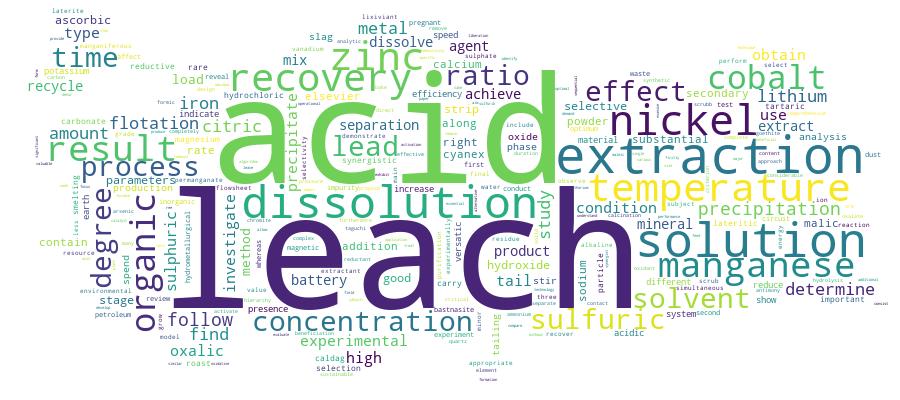
Competency Cloud
36 results
Scholarly Output Search Results
Now showing 1 - 10 of 36
Article Leaching of a Complex Zn-Pb Ore in Sulfuric Acid Solution(2024-09-22) Gökçen, Hasan Serkan; Altıner, Mahmut; Kaya, Muammer; Top, Soner; Kursunoglu, Sait; Hussaini, Shokrullah; Ozsarac, SafakBu çalışmada Gazipaşa-Aydap kompleks Zn-Pb cevher numunesinin sülfürik asit çözeltisindeki liç davranışı incelenmiştir. Öncelikle cevher örneğinin kimyasal ve mineralojik bileşimleri AAS, ICP-OES, XRF ve XRD analizleri ile belirlenmiştir. Cevherin yapısının çok karmaşık olduğu ve yüksek miktarda çinko (%16.4), kurşun (%10.6), demir (%2.6) ve az miktarda bakır (%0.2) içerdiği görülmüştür. 2 M sülfürik asit konsantrasyonu, 25 °C liç sıcaklığı, 1/10 katı/sıvı oranı ve 125 rpm çalkalama hızı parametrelerinde gerçekleştirilen liç işlemi ile %86.7 Zn, %90 Cu ve %25.2 Fe'nin liç çözeltisine alınabileceği saptanmıştır. Deneysel sonuçlar, liç sıcaklığının arttırılmasının çinko çözünmesi üzerinde yararlı bir etkisinin olmadığını ancak demir çözünmesini önemli ölçüde arttırdığını ortaya koymuştur. Genel olarak çinkonun, kısa bir liç süresi (30 dakika), düşük bir liç sıcaklığı (25 °C), nispeten düşük bir sülfürik asit konsantrasyonu (2 M) ve nispeten yüksek bir katı-sıvı oranı (2/10) kullanılarak kompleks cevherden ekstrakte edilebileceği belirlenmiştir.Article Manganzı Demir Cevherinden Manganın Çözündürülmesinde Farklı İndirgeme Maddelerinin Etkisi(Chamber of Mining Engineers of Turkey, 2022-06-26) Top, S.; Altiner, Mahmut; Kursunoglu, SaitIIn this paper, the manganese extraction from a manganiferous iron ore was investigated using reductive leaching. Various chemicals were used as a reducing agent to leach manganese selectively from the ore in the presence of sulfuric acid (H2SO4) solution. Firstly, optimum dissolution values were determined for selective manganese dissolution without using a reducing agent. As it was aimed at the selective extraction of manganese from the ore, the reductive leaching tests were conducted by adding the reducing agents under the following optimal parameters: a leaching time of 1 h, a stirring speed of 300 rpm, a temperature of 70°C, a sulfuric acid concentration of 1 M where the ore was leached with an extraction ratio of 11.54% Mn and 2.16% Fe. Manganese was dissolved with high efficiencies (up to 97.46%) from the ore by using different organic compounds (tartaric acid (C<inf>4</inf>H<inf>6</inf>O<inf>6</inf>), oxalic acid (C<inf>2</inf>H<inf>2</inf>O<inf>4</inf>), citric acid (C<inf>6</inf>H<inf>8</inf>O<inf>7</inf>), glucose (C<inf>6</inf>H<inf>12</inf>O<inf>6</inf>), sucrose (C<inf>12</inf>H<inf>22</inf>O<inf>11</inf>), and maleic acid (C<inf>4</inf>H<inf>4</inf>O<inf>4</inf>)) as the reducing agents. © 2022 Elsevier B.V., All rights reserved.Article Citation - WoS: 4Citation - Scopus: 5Characterization of Nickel in Chromite Beneficiation Tailings by Mineral Liberation Analysis and Its Recovery by H2SO4 Leaching Followed by Oxalic Acid Precipitation(Springer, 2023-11-13) Altiner, Mahmut; Ibrahim, Ahmedaljaali Ibrahim Idrees; Kursunoglu, Sait; Top, Soner; Bayat, OktayThis study investigated the recovery of nickel from tailings (0.2% Ni) obtained in a chromite beneficiation plant using H2SO4 leaching followed by oxalic acid precipitation. The tailings were characterized using mineral liberation analysis. Ni was found as Fe-Ni, Fe-Ni-Co sulfide minerals, which were encapsulated in serpentine, olivine, pyroxene and clinochlore. Liberated fine chromite minerals benefited from magnetic separation followed by Falcon concentrator. A chromite product with a grade > 37% was obtained. The effect of leaching conditions including acid concentration, temperature, time and solid-to-liquid ratio on the leaching behavior of Ni was investigated based on the Taguchi approach. It was possible to extract Ni with a rate of > 98% from the tailings using the following conditions: H2SO4 concentration of 3 M, solid-to-liquid ratio of 1:20 and ambient temperature for 2 h. Finally, Ni was precipitated as an oxalate form with a precipitation rate of 72%. It is believed that implementing additional purification methods like solvent extraction may be essential to obtain a high-purity nickel product from the leach solution of oxalate precipitate. Experimental results indicate that the tailings used in this study are a good alternative as Ni resource in the near future.Article Citation - WoS: 148Citation - Scopus: 167Critical Review on Secondary Zinc Resources and Their Recycling Technologies(Elsevier, 2020-08) Kaya, Muammer; Hussaini, Shokrullah; Kursunoglu, SaitIn a race to save the earth of its rapidly depleting natural resources, the use of Secondary Raw Materials (SMRs) as alternative replacements in several processes is currently intensively pursued. The valorization of SMRs is consistent with the sustainable circular economy, where resource efficiency is maximized for the benefit of both the economy and green environment. In line with this mandate, this article focuses on investigating recent studies on secondary zinc (Zn) resources and describing state-of-art Zn recycling technologies. Globally, some of the main Zn-containing secondary raw materials are mine/concentrator/smelter tailings, wastes, slags, scraps, dust, etc. Although the pyrometallurgical process has been dominant in the secondary metal recycling processes, there has been growing interest and pressure to achieve sustainable and greener recycling methods to remediate the environmental problems caused by emissions of toxic heavy metals and sulfur oxides in the traditional smelting process. In the last decades, many sustainable and environmentally friendly novel hydrometallurgical processes for Zn extraction were developed to overcome tougher legislation and meet cost competitiveness. Secondary Zn recycling focuses on the development of selective Zn-rich but Pb, Fe, As-lean recovery processes.Conference Object Citation - WoS: 13Citation - Scopus: 13Leaching of Turkish Oxidized Pb-Zn Flotation Tailings by Inorganic and Organic Acids(Springer International Publishing AG, 2020) Kaya, Muammer; Kursunoglu, Sait; Hussaini, Shokrullah; Gul, ErkanAn eco-friendly approach and simultaneous recovery of metals from mine tailings is still a significant challenge. This study investigates the extraction of zinc metal from the Kayseri region oxidized lead-zinc (Pb-Zn) flotation tailings by leaching using three different inorganic acids (HNO3, HCl, and H2SO4) and six different organic acids (citric (CA), oxalic (OA), formic (FA), ascorbic (AA), malic (MA), and tartaric (TA) acids). The effects of acid type and concentration, leaching temperature and time, and solid/liquid (S/L) ratio were studied for maximum Zn dissolution and minimum Pb, Fe, and As co-dissolution at lowest temperature and leaching time. For inorganic acids at 1/10 S/L ratio, 1.0MH(2)SO(4) and HCl concentrations achieved 92% Zn + 0% Pb + 12% Fe at 40 degrees C leaching temperature and 60 min leaching time and 92% Zn + 10% Pb + 0% Fe at 80 degrees C leaching temperature and 30 min leaching time, respectively. For organic acids, at 1/10 S/L ratio and 1.0M concentration, 92% Zn + 8.3% Pb with malic acid at 80 degrees C leaching temperature and 180 min leaching time and 91% Zn + 12% Pb with citric acid at 60 degrees C leaching temperature and 180 min leaching time were achieved. 1.0 M formic acid dissolved about 83% Zn + 2.8% Pb at 80 degrees C and 180 min leaching time. More than 90% Zn dissolution can be succeeded by using either inorganic acids at 40 degrees C for 30-60 min leaching time or organic acids at 60-80 degrees C for 180 min leaching time. Oxalic acid significantly dissolved Fe and As without Zn and Pb dissolution.Article Citation - WoS: 5Citation - Scopus: 5Selective Leaching of a Mixed Nickel-Cobalt Hydroxide Precipitate in Sulphuric Acid Solution With Potassium Permanganate as Oxidant(Taylor & Francis inc, 2020-10-12) Hussaini, Shokrullah; Ichlas, Zela Tanlega; Top, Soner; Kursunoglu, Sait; Kaya, MuammerSelective leaching of a mixed nickel-cobalt hydroxide precipitate was investigated using potassium permanganate as oxidant in sulfuric acid solution. 94.9% Ni, 50% Co and 0.6% Mn were dissolved under the following conditions: sulfuric acid concentration of 0.75 M, potassium permanganate of 5 g/L, temperature of 30 degrees C, leaching duration of 60 min, solid-to-liquid ratio of 1/10, and stirring speed of 400rpm. The pregnant leach solution was subjected to a solvent extraction process. 98% Co and 99% Mn were extracted at pH 4.84 with 30% (v/v) Cyanex 272, leaving essentially all nickel in the raffinate. Based on the experimental results, a flowsheet is proposed.Article Citation - WoS: 8Citation - Scopus: 8Separation of Mn and Fe From a Manganiferous Iron Ore Using Horse Dung as Reductant: A Zero Waste Approach(Springer, 2022-01-13) Top, Soner; Altiner, Mahmut; Kursunoglu, SaitThe separation of manganese and iron from a manganiferous iron ore using horse dung (biomass) as reductant was investigated in a sulfuric acid solution, and 99.80% Mn and 17.76% Fe were extracted into the solution under these leaching conditions: 1 M sulphuric acid concentration, 120 g/L biomass, 1/10 solid to liquid ratio, 300 rev/min stirring speed, 90 degrees C leaching temperature, and 3 h leaching time. In the first precipitation step, the iron and aluminum were first rejected from the solution at pH 5.04. Thereafter, 98.58% Mn was precipitated at pH 10 in the second step. The precipitate was identified as a pyrochroite mineral. After the leaching, the residue was subjected to a carbothermal reduction process conducted at 700 degrees C for 10 min in the presence of no extra reductant. The residue was converted to magnetite mineral, which can be easily recovered by magnetic separation. Based on the experimental results, a flowsheet has been proposed.Article Citation - WoS: 38Citation - Scopus: 45Selection of an Appropriate Acid Type for the Recovery of Zinc From a Flotation Tailing by the Analytic Hierarchy Process(Elsevier Sci Ltd, 2021-02) Kursunoglu, Sait; Kursunoglu, Nilufer; Hussaini, Shokrullah; Kaya, MuammerThe selection of acid type for metal dissolution from minerals is an important issue in leaching operations. Acids are used to recover valuable elements from the minerals by dissolving them in a solution. The acid must offer a high recovery at marginal cost and a low environmental effect. Many parameters can affect the acid type selection for high leaching recovery and low environmental effect and thus, the selection of an acid type is complex. In this study, based on the experimental results obtained from the bench-scale laboratory studies, the selection of acid type for the recovery of zinc from a flotation tailing was investigated using the analytic hierarchy process (AHP). The utilization of AHP was supported by the use of ExpertChoice (R) 2000 software. The outcomes demonstrated that sulfuric acid is the most desirable acid type with a ranking of 0.541, tracked by citric acid, and oxalic acid with scoring of 0.282 and 0.177, respectively. Furthermore, analyses of sensitivity were performed to examine the influence of the main criteria on the different acid type. It emerged that citric acid can be used when the environmental main criterion ascended from 7.8% to 75.3%. (C) 2020 Elsevier Ltd. All rights reserved.Article Citation - WoS: 11Citation - Scopus: 12Production of Mn3O4 Nanoparticles From a Manganiferous Iron Ore via Reductive Leaching, Precipitation, and Calcination(Elsevier, 2022-02) Altiner, Mahmut; Top, Soner; Bouchekrit, Chafia; Kursunoglu, SaitThe synthesis of Mn3O4 nanoparticles from a manganiferous iron ore through reductive leaching, precipitation, and calcination was investigated. The reductive leaching results showed that Mn (99.9%) was almost completely extracted into the leaching solution along with a substantial amount of Mg (99.9%), Al (99.5%), Ca (80%), and Fe (22.9%) under the following conditions: 30 g/L tartaric acid as a reducing agent, 1 M HCl solution, leaching temperature of 90 ?, and leaching duration of 3 h. In the first precipitation step, Fe and Al were expelled from the pregnant leach solution by the addition of NaOH prior to conducting the precipitation experiments for the production of manganese carbonate (MnCO3) particles from the purified solution. In the second precipitation step, MnCO3 particles were produced using sodium carbonate (Na2CO3) as the precipitating agent. The effects of parameters such as reaction temperature, Na2CO3 concentration, and experimental duration were investigated using the Taguchi approach. Manganse(II) was precipitated in the form of MnCO3 particles (97.4%) under the following conditions: a temperature of 30 ?C, Na2CO3 concentration of 0.014 mol/L, and duration of 30 min. The precipitate was observed to have a structure similar to that of rhodochrosite (MnCO3). Thermogravimetric/ differential thermal analyses were subsequently performed in three different atmospheres (air, oxygen, and nitrogen) to select a suitable atmosphere for calcination. The experimental results indicated the formation of hausmannite (Mn3O4) with a purity of 97.5% Mn3O4, 0.42% MgO, 1.66% CaO, and 0.34% FeO. The specific surface area, particle size, Curie temperature, magnetisation, coercivity, and remanence ratio of the final product obtained via 3 h of calcination at 350 C were estimated to be 133.3 m(2)/g, < 142.2 nm, 56 K, 10.10 Am-2/kg, 0.35 T, and 0.19, respectively. The characterisation results revealed the excellent low-temperature ferromagnetic properties of the produced Mn3O4 nanoparticles.Article Citation - WoS: 4Citation - Scopus: 3Recovery of Vanadium and Nickel From a High Caco3 Containing Petroleum Coke Ash by Roasting and Acidic Leaching(Springer, 2023-11-08) Yurtseven, Ozgun; Ibrahim, Ahmedaljaali Ibrahim Idrees; Top, Soner; Kursunoglu, Sait; Altiner, MahmutIn this study, it was aimed to extract vanadium (V) and nickel (Ni) from a petroleum coke ash (PCA) using a roasting process without additives, followed by leaching with sulfuric acid (H2SO4). The experiments were designed based on the Taguchi approach, taking into account the parameters of temperature, acid concentration, time, and solid ratio. Additional leaching tests were conducted on the non-roasted PCA for comparison, to assess the effect of roasting on the extractions of V and Ni. The results showed that no extra reducing agent was needed as the PCA contained high levels of CaCO3, which could be used as a reducing agent during roasting. It was found that roasting was essential for high Ni extractions, but had no strong effects on V extractions. The Ni extraction was found to be between 13.3 and 80.8% for the non-roasted PCA and between 43.6 and 99.3% for the roasted PCA. The V extraction was between 36 and 97.9% for the non-roasted PCA and between 45.4 and 99.9% for the roasted PCA. The optimal leaching conditions were determined to be a sulfuric acid of 4.5 M, a solid ratio of 10%, a temperature of 75 degrees C, and a time of 75 min. In addition, it was determined that the leaching conditions had a great effect on the oxidation state of vanadium ions, and an increase in the acid concentration led to the formation of V3+ ions (green color) instead of VO2+ ions (blue color) in the pregnant leach solution. The final pregnant leach solution containing 1056.50 mg/L V, and 251.85 mg/L Ni was achieved with an extraction yields of > 98%. The experimental results were greatly fitted by the shrinking core model and the activation energy (E-a) for V and Ni was calculated as 3.60 and 4.01 kJ/mol, indicating that the leaching mechanism can be explained by the diffusion control model.