
Usta, Hakan
Loading...
Profile URL
Name Variants
HAKAN USTA Usta, H. Usta, Hakan
Job Title
Prof. Dr.
Email Address
hakan.usta@agu.edu.tr
Main Affiliation
02.07. Malzeme Bilimi ve Nanoteknoloji Mühendisliği
Status
Current Staff
Website
ORCID ID
Scopus Author ID
Turkish CoHE Profile ID
Google Scholar ID
WoS Researcher ID
Sustainable Development Goals


No records found in other affiliations.
| Journal | Count |
|---|
Current Page: 1 / NaN
Scopus Quartile Distribution
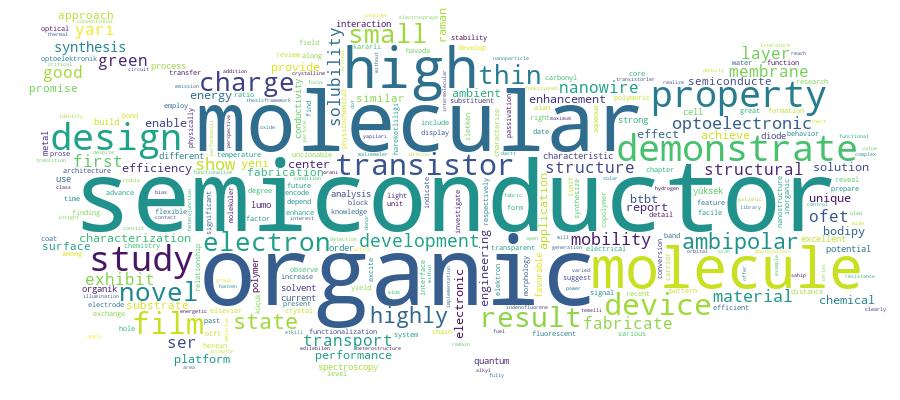
Competency Cloud
77 results
Scholarly Output Search Results
Now showing 1 - 10 of 77
Article Citation - WoS: 54Citation - Scopus: 57Ultralow Bandgap Molecular Semiconductors for Ambient-Stable and Solution-Processable Ambipolar Organic Field-Effect Transistors and Inverters(Royal Soc Chemistry, 2017) Ozdemir, Resul; Choi, Donghee; Ozdemir, Mehmet; Kwon, Guhyun; Kim, Hyekyoung; Sen, Unal; Usta, HakanThe design and development of novel ambipolar semiconductors is very crucial to advance various optoelectronic technologies including organic complementary (CMOS) integrated circuits. Although numerous high-performance ambipolar polymers have been realized to date, small molecules have been unable to provide high ambipolar performance in combination with ambient-stability and solution-processibility. In this study, by implementing highly p-electron deficient, ladder-type IFDK/IFDM acceptor cores with bithiophene donor units in D-A-D pi-architectures, two novel small molecules, 2OD-TTIFDK and 2OD-TTIFDM, were designed, synthesized and characterized in order to achieve ultralow band-gap (1.21-1.65 eV) semiconductors with sufficiently balanced molecular energetics for ambipolarity. The HOMO/LUMO energies of the new semiconductors are found to be -5.47/-3.61 and -5.49/-4.23 eV, respectively. Bottom-gate/top-contact OFETs fabricated via solution-shearing of 2OD-TTIFDM yield perfectly ambient stable ambipolar devices with reasonably balanced electron and hole mobilities of 0.13 cm(2) V-1 s(-1) and 0.01 cm(2) V-1 s(-1), respectively with I-on/I-off ratios of similar to 10(3)-10(4), and 2OD-TTIFDK-based OFETs exhibit ambipolarity under vacuum with highly balanced (mu(e)/mu(h) similar to 2) electron and hole mobilities of 0.02 cm(2) V-1 s(-1) and 0.01 cm(2) V-1 s(-1), respectively with I-on/I-off ratios of similar to 10(5)-10(6). Furthermore, complementary-like inverter circuits were demonstrated with the current ambipolar semiconductors resulting in high voltage gains of up to 80. Our findings clearly indicate that ambient-stability of ambipolar semiconductors is a function of molecular orbital energetics without being directly related to a bulk p-backbone structure. To the best of our knowledge, considering the processing, charge-transport and inverter characteristics, the current semiconductors stand out among the best performing ambipolar small molecules in the OFET and CMOS-like circuit literature. Our results provide an efficient approach in designing ultralow band-gap ambipolar small molecules with good solution-processibility and ambient-stability for various optoelectronic technologies, including CMOS-like integrated circuits.Article Citation - WoS: 62Citation - Scopus: 75Solution-Processable Bodipy-Based Small Molecules for Semiconducting Microfibers in Organic Thin-Film Transistors(Amer Chemical Soc, 2016-05-23) Ozdemir, Mehmet; Choi, Donghee; Kwon, Guhyun; Zorlu, Yunus; Cosut, Bunyemin; Kim, Hyekyoung; Usta, HakanElectron-deficient pi-conjugated small molecules can function as electron-transporting semiconductors in various optoelectronic applications. Despite their unique structural, optical, and electronic properties, the development of BODIPY-based organic semiconductors has lagged behind that of other pi-deficient units. Here, we report the design and synthesis of two novel solution-proccessable BODIPY-based small molecules (BDY-3T-BDY and BDY-4T-BDY) for organic thin-film transistors (OTFTs). The new semiconductors were fully characterized by H-1/C-13 NMR, mass spectrometry, cyclic voltammetry, UV-vis spectroscopy, photoluminescence, differential scanning calorimetry, and thermogravimetric analysis. The single-crystal X-ray diffraction (XRD) characterization of a key intermediate reveals crucial structural properties. Solution-sheared top-contact/bottom-gate OTFTs exhibited electron mobilities up to 0.01 cm(2)/V center dot s and current on/off ratios of >10(8). Film microstructural and morphological characterizations indicate the formation of relatively long (similar to 0.1 mm) and micrometer-sized (1-2 mu m) crystalline fibers for BDY-4T-BDY-based films along the shearing direction. Fiber-alignment-induced charge-transport anisotropy (mu?/mu approximate to 10) was observed, and higher mobilities were achieved when the microfibers were aligned along the conduction channel, which allows for efficient long-range charge-transport between source and drain electrodes. These OTFT performances are the highest reported to date for a BODIPY-based molecular semiconductor, and demonstrate that BODIPY is a promising building block for enabling solution-processed, electron-transporting semiconductor films.Article Achieving Extreme Solubility and Green Solvent-Processed Organic Field-Effect Transistors: A Viable Asymmetric Functionalization of [1]Benzothieno[3,2-B][1]Benzothiophenes(American Chemical Society, 2025-08-22) Yıldız, T.A.; Deneme, İ.; Usta, H.Novel structural engineering strategies for solubilizing high-mobility semiconductors are critical, which enables green solvent processing for eco-friendly, sustainable device fabrication, and unique molecular properties. Here, we introduce a viable asymmetric functionalization approach, synthesizing monocarbonyl [1]benzothieno[3,2-b][1]benzothiophene molecules on a gram scale in two transition-metal-free steps. An unprecedented solubility of up to 176.0 mg·mL–1(at room temperature) is achieved, which is the highest reported to date for a high-performance organic semiconductor. The single-crystal structural analysis reveals a herringbone motif with multiple edge-to-face interactions and nonclassical hydrogen bonds involving the carbonyl unit. The asymmetric backbones adopt an antiparallel arrangement, enabling face-to-face π-π interactions. The mono(alkyl-aryl)carbonyl-BTBT compound, m-C<inf>6</inf>PhCO-BTBT enables formulations in varied green solvents, including acetone and ethanol, all achieving p-channel top-contact/bottom-gate OFETs in ambient conditions. Charge carrier mobilities of up to 1.87 cm2/V·s (μ<inf>eff</inf>≈ 0.4 cm2/V·s; I<inf>on</inf>/I<inf>off</inf>≈ 107–108) were achieved. To the best of our knowledge, this is one of the highest OFET performances achieved using a green solvent. Hansen solubility parameters (HSP) analysis, combined with Scatchard–Hildebrand regular solution theory and single-crystal packing analysis, elucidates this exceptional solubility and reveals unique relationships between molecular structure, interaction energy densities, cohesive energetics, and solute–solvent distances (R<inf>a</inf>). An optimal solute–green solvent interaction distance in HSP space proves critical for green solvent-processed thin-film properties. This asymmetric functionalization approach, with demonstrated unique solubility insights, provides a foundation for designing green solvent-processable π-conjugated systems, potentially advancing innovation in sustainable (opto)electronics and bioelectronics. © 2025 Elsevier B.V., All rights reserved.Book Part Citation - Scopus: 19Polymeric and Small-Molecule Semiconductors for Organic Field-Effect Transistors(wiley, 2015-01-16) Usta, Hakan; Facchetti, A. F.This chapter reviews the achievements in the development of molecular and polymeric semiconductors for charge transport in thin-film transistors (TFTs). In particular, it introduces the basic concepts of organic semiconductor structure and organic thin-film transistor (OTFT) operation and then focuses on initial studies and works. Organic semiconductors for OTFTs must possess two essential structural features for their successful implementation in printed electronics. The first feature is a π-conjugated core/chain composed of linked unsaturated units. The second feature is core functionalization with solubilizing substituents, which is essential for inexpensive manufacture by solution methods as well as for enhancing solid-state core interactions. There are several advantages in using polymeric versus molecular p-conjugated semiconductors. Isoindigo has become a popular conjugated moiety in polymer semiconductor design because of its strong electron-withdrawing character. Polymeric p-channel TFTs have reached new heights, with hole mobilities unthinkable only few years back and surpassing 10 cm2V-1 s-1. © 2018 Elsevier B.V., All rights reserved.Article Citation - WoS: 11Citation - Scopus: 11Logarithmic Organic Photodetectors(Elsevier Science SA, 2015-12) Elgazzar, Elsayed; Ozdemir, Mehmet; Usta, Hakan; Al-Ghamdi, Ahmed A.; Dere, A.; El-Tantawy, Farid; Yakuphanoglu, F.A novel photodetector of Al/GO:C8-BTBT/n-Si/Au with various graphene oxide (GO) contents has been investigated. The electrical properties of the diodes were characterized by current-voltage (I-V) and capacitance-voltage (C-V) measurements. The values of barrier height, ideality factor, and series resistance of the diodes were determined from I-V characteristic curves by using Norde's equations. The photocurrent properties of the diode were studied under various illumination intensities. The photoconducting mechanism of the diodes is controlled by the traps. The photoresponse properties of the diodes are increased with GO contents. The obtained results indicate that graphene oxide doped 2,7-dioctyl[1]benzothieno[3,2-b][1]benzothiophene/n-Si heterojunctions can be used as a photodetector for optoelectronic applications. (C) 2015 Elsevier B.V. All rights reserved.Article Citation - WoS: 30Citation - Scopus: 32A Solution-Processable Liquid-Crystalline Semiconductor for Low-Temperature Air-Stable N-Channel Field-Effect Transistors(Wiley-VCH Verlag GmbH, 2017-02-22) Ozdemir, Resul; Choi, Donghee; Ozdemir, Mehmet; Kim, Hyekyoung; Kostakoglu, Sinem Tuncel; Erkartal, Mustafa; Usta, HakanA new solution-processable and air-stable liquid-crystalline nchannel organic semiconductor (2,2'-(2,8-bis(5-(2-octyldodecyl) thiophen-2-yl) indeno[1,2-b] fluorene-6,12-diylidene) dimalononitrile, alpha,omega-2OD-TIFDMT) with donor-acceptor-donor (D-AD) pi conjugation has been designed, synthesized, and fully characterized. The new semiconductor exhibits a low LUMO energy (-4.19 eV) and a narrow optical bandgap (1.35 eV). The typical pseudo-focal-conic fan-shaped texture of a hexagonal columnar liquid-crystalline (LC) phase was observed over a wide temperature range. The spin-coated semiconductor thin films show the formation of large (approximate to 0.5-1 mu m) and highly crystalline platelike grains with edge-on molecular orientations. Low-temperature-annealed (50 degrees C) top-contact/bottom-gate OFETs have provided good electron obility values as high as 0.11 cm(2) (Vs)(-1) and high I-on/I-off ratios of 10(7) to 10(8) with excellent ambient stability. This indicates an enhancement of two orders of magnitude (100 V) when compared with the b-substituted parent semiconductor, beta-DD-TIFDMT (2,2'-(2,8-bis(3-dodecylthiophen- 2-yl) indeno[1,2-b] fluorene-6,12-diylidene) dimalononitrile). The current rational alkyl-chain engineering route offers great advantages for D-A-D pi-core coplanarity in addition to maintaining good solubility in organic solvents, and leads to favorable optoelectronic/physicochemical characteristics. These remarkable findings demonstrate that alpha,omega-2OD-TIFDMT is a promising semiconductor material for the development of n-channel OFETs on flexible plastic substrates and LC-state annealing of the columnar liquid crystals can lower the electron mobility for transistor-type charge transport.Book Part Citation - Scopus: 2Paper-Based Substrates for Sustainable (OPTO)Electronic Devices(Elsevier, 2022) Usta, Hakan; Facchetti, A. F.Cellulose-based paper has been a convenient eco-friendly platform for storing and exchanging information for thousands of years. Amazingly, the studies and advancements in the past decade have demonstrated that paper and nanocellulose-based substrates are also attractive for fabricating flexible electronic circuits as well as optoelectronic components and devices. Paper and nanocellulose-based substrates have been considered for use in new generation green devices and optoelectronic applications based on their sustainable and inexpensive source, lightweight, and superior mechanical/optical properties, all factors that could also reduce manufacturing costs for producing these devices. In this chapter, we review functional materials and optoelectronic devices fabricated on paper or nanocellulose-based substrates including transistors and circuits, solar cells, light-emitting diodes, and other devices, such as sensors/actuators, batteries, supercapacitors/energy-harvesters, and breathalyzer/diagnosis devices. We also thoroughly discuss remaining challenges and promising research directions with paper-based substrates for future advancements in green optoelectronics. © 2022 Elsevier B.V., All rights reserved.Article Citation - WoS: 1Citation - Scopus: 1Labyrinthine Microstructures With a High Dipole Moment Boron Complex for Molecular Physically Unclonable Functions(American Chemical Society, 2025-10-29) Yıldız, T.A.; Kiremitler, N.B.; Kayacı, N.; Kalay, M.; Özcan, E.; Deneme, I.; Usta, H.The design and development of novel molecular-physically unclonable functions (PUFs) with advanced encoding characteristics and ease of fabrication have recently attracted attention in cryptography, secure authentication, and anticounterfeiting. Here, we report the development of a new high dipole-moment small molecule, InIm-BF<inf>2</inf>, a difluoroborate complex of an indolyl-imine ligand, and the fabrication of unique labyrinthine patterns through a facile two-step thin film process under ambient conditions. The new molecule has a dipolar, coplanar π-backbone and arranges in the solid state with antisymmetric cofacial π-stackings (3.86 Å). These properties, along with short C–H···π contacts (2.74–2.88 Å) and nonclassical C–H···F hydrogen bonds (2.47–2.51 Å) (23.4% and 11.5% of the Hirshfeld surfaces, respectively), drive the formation of amorphous molecular PUF patterns with disordered, short-range interactions. Spin-coating followed by thermal annealing at a moderate temperature produces nanoscopic molecular thin films with intricate labyrinthine patterns. These patterns, characterized by interconnected, irregularly shaped, micron-sized (≈50–100 μm) features, exhibit excellent PUF characteristics, verified through advanced image analysis and computational algorithms. Unlike randomly positioned isolated features in classical binarized keys, the interconnected labyrinthine patterns possess rich entropy and complex features, directly authenticated via deep-learning methodologies. Our work not only demonstrates a facile, promising approach to fabricating unique high-entropy PUF patterns but also provides critical insights into designing advanced molecular materials for next-generation security applications. © 2025 The Authors. Published by American Chemical SocietyDoctoral Thesis FUNCTIONALIZED LOW LUMO [1]BENZOTHIENO[3,2-B][1]BENZOTHIOPHENE (BTBT)-BASED MOLECULAR SEMICONDUCTORS FOR ORGANIC FIELD EFFECT TRANSISTORS(Abdullah Gül Üniversitesi, Fen Bilimleri Enstitüsü, 2021) Özdemir, Resul; Usta, HakanDAcTTs have provided an excellent π-framework for the development of high mobility p-type molecular semiconductors in the past decade. However, n-type DAcTTs are rare and their electron transporting characteristics remain largely unexplored. In the second chapter of this thesis, the first example of an n-type BTBT-based semiconductor, D(PhFCO)-BTBT, has been realized via a two-step transition metal-free process without using chromatographic purification. The corresponding TC/BG-OFET devices demonstrated μe (max) = ~0.6 cm2/Vs and Ion/Ioff ratio = 107-108. The large band-gap BTBT π-core is a promising candidate for high mobility n-type organic semiconductors and, combination of very large intrinsic charge transport capabilities and optical transparency, may open a new perspective for next-generation (opto)electronics. In the third chapter of this thesis, a series of BTBT-based small molecules, D(C7CO)-BTBT, C7CO-BTBT-CC(CN)2C7, and D(C7CC(CN)2)-BTBT, have been developed in “S-F-BTBT-F-S (F/S: functional group/substituent)” molecular architecture. Combining with D(PhFCO)-BTBT, a molecular library with systematically varied chemical structures has been studied herein for the first time for low LUMO DAcTTs, and key relationships have been elucidated. The molecular engineering perspectives presented in this thesis may give unique insights into the design of novel electron transporting thienoacenes for unconventional optoelectronics.Article Citation - WoS: 29Citation - Scopus: 30Revisiting the Role of Charge Transfer in the Emission Properties of Carborane-Fluorophore Systems: A TDDFT Investigation(Amer Chemical Soc, 2022-06-05) Tahaoglu, Duygu; Usta, Hakan; Alkan, FahriIn this study, we performed a detailed investigation of the S-1 potential energy surface (PES) of o-carborane-anthracene (o-CB-Ant) with respect to the C-C bond length on o-CB and the dihedral angle between o-CB and Ant moieties. The effects of different substituents (F, Cl, CN, and OH) on carbon- or boron-substituted o-CB, along with a pi-extended acene-based fluorophore, pentacene, on the nature and energetics of S-1 -> S-0 transitions are evaluated. Our results show the presence of a non-emissive S-1 state with an almost pure charge transfer (CT) character for all systems as a result of significant C-C bond elongation (C-C = 2.50-2.56 angstrom) on o-CB. In the case of unsubstituted o-CB-Ant, the adiabatic energy of this CT state corresponds to the global minimum on the S-1 PES, which suggests that the CT state could be involved in emission quenching. Despite large deformations on the o-CB geometry, predicted energy barriers are quite reasonable (0.3-0.4 eV), and the C-C bond elongation can even occur without a noticeable energy penalty for certain conformations. With substitution, it is shown that the dark CT state becomes even more energetically favorable when the substituent shows -M effects (e.g., -CN), whereas substituents showing +M effects (e.g., -OH) can result in an energy increase for the CT state, especially for partially stretched C-C bond lengths. It is also shown that the relative energy of the CT state on the PES depends strongly on the LUMO level of the fluorophore as this state is found to be energetically less favorable compared to other conformations when anthracene is replaced with pi-extended pentacene. To our knowledge, this study shows a unique example of a detailed theoretical analysis on the PES of the S-1 state in o-CB-fluorophore systems with respect to substituents or fluorophore energy levels. Our findings could guide future experimental work in emissive o-CB-fluorophore systems and their sensing/optoelectronic applications.