
Bal, Burak
Loading...
Profile URL
Name Variants
Bal, B. Bal, Burak Burak Bal
Job Title
Prof. Dr.
Email Address
burak.bal@agu.edu.tr
Main Affiliation
02.06. Makine Mühendisliği
Status
Current Staff
Website
ORCID ID
Scopus Author ID
Turkish CoHE Profile ID
Google Scholar ID
WoS Researcher ID
Sustainable Development Goals


No records found in other affiliations.
| Journal | Count |
|---|
Current Page: 1 / NaN
Scopus Quartile Distribution
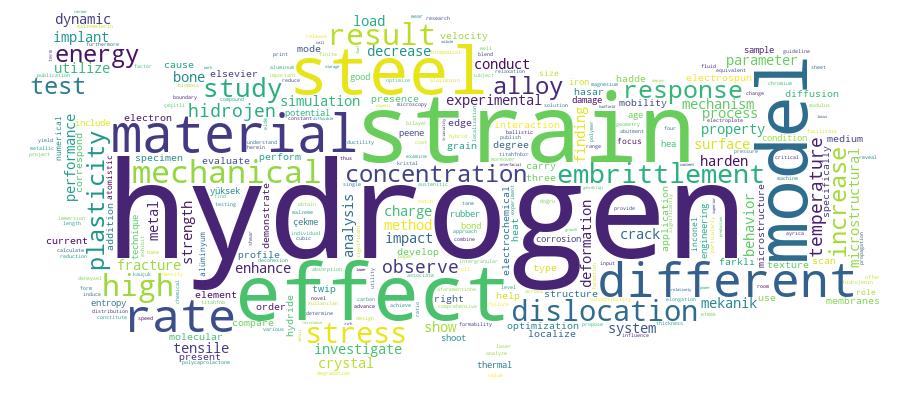
Competency Cloud
50 results
Scholarly Output Search Results
Now showing 1 - 10 of 50
Article Citation - WoS: 5Citation - Scopus: 6Effect of Pre-Rolling Temperature on the Interfacial Properties and Formability of Steel-Steel Bilayer Sheet in Single Point Incremental Forming(Sage Publications Ltd, 2020-10-14) Hassan, Malik; Hussain, Ghulam; Ali, Aaqib; Ilyas, Muhammad; Malik, Sohail; Khan, Wasim A.; Bal, BurakThe aim of this research was to investigate the effect of pre-rolling temperature on the interfacial properties in delamination modes 1 and 2; and formability in Single Point Incremental Forming (SPIF) of Steel-Steel (St-St) bilayer sheet prepared by roll bonding process. The roll bonding process was performed at three pre-rolling temperatures, 700 degrees C, 800 degrees C, and 950 degrees C, with a constant thickness reduction ratio of 58%. The bond strength and critical strain energy release rate (CSERR) were measured to characterize the interface of St-St bilayer sheet. T-peel test for mode 1 and tensile shear test for mode 2 were conducted to determine the interfacial properties. The formability of St-St bilayer sheet in SPIF was measured in terms of maximum wall angle. The results showed that the increase in pre-rolling temperature from 700 degrees C to 950 degrees C enhanced the bond strength and CSERR, in both mode 1 and 2. The enhancement in bond strength with an increase in pre-rolling temperature was 149.5% and 203% in mode 1 and 2, respectively. However, the increase in CSERR in mode 1 and 2 was 115% and 367%, respectively. The formability of St-St bilayer sheet also showed an increasing trend with an increase in pre-rolling temperature. Moreover, a consistent relation between formability and interfacial parameters was observed. It was also found that to successively deform the bilayer sheet into the desired shape, it is necessary for the sheet to be heated above the critical temperature during fabrication to facilitate good bonding between two sheets.Article Citation - WoS: 13Citation - Scopus: 15Lateral Angular Co-Extrusion: Geometrical and Mechanical Properties of Compound Profiles(MDPI, 2020-08-28) Thuerer, Susanne Elisabeth; Peddinghaus, Julius; Heimes, Norman; Bayram, Ferdi Caner; Bal, Burak; Uhe, Johanna; Klose, Christian; Thürer, Susanne ElisabethA novel co-extrusion process for the production of coaxially reinforced hollow profiles has been developed. Using this process, hybrid hollow profiles made of the aluminum alloy EN AW-6082 and the case-hardening steel 20MnCr5 (AISI 5120) were produced, which can be forged into hybrid bearing bushings by subsequent die forging. For the purpose of co-extrusion, a modular tooling concept was developed where steel tubes made of 20MnCr5 are fed laterally into the tool. This LACE (lateral angular co-extrusion) process allows for a variation of the volume fraction of the reinforcement by using steel tubes with different wall thicknesses, which enabled the production of compound profiles having reinforcement contents of either 14 vol.% or 34 vol.%. The shear strength of the bonding area of these samples was determined in push-out tests. Additionally, mechanical testing of segments of the hybrid profiles using shear compression tests was employed to provide information about the influence of different bonding mechanisms on the strength of the composite zone.Doctoral Thesis Yapay Zeka Destekli Shot Peening Prosesinin Optimizasyonu ve İkincil Proseslerin SLM ile Üretilen AlSi10Mg Alaşımının Hidrojen Kırılganlık Direnci ve Mekanik Performansı Üzerindeki Etkilerinin İncelenmesi(2025) Karaveli, Kadir Kaan; Bal, BurakBu tez, Seçici Lazer Ergitme (SLM) yöntemiyle üretilen AlSi10Mg alaşımlarında bilyalı dövme işlemlerinin optimizasyonunu ve hidrojen gevrekliğinin azaltılmasını araştırmaktadır. Birinci bölümde, süreç optimizasyon yöntemleri (ör. Taguchi, Box-Behnken), metal katkı üretimdeki (AM) sorunlar (artık gerilme, gözeneklilik) ve hidrojen gevrekliğinin mekanizmaları ile test yöntemleri ele alınmıştır. İkinci ve üçüncü bölümler, Almen testleriyle doğrulanan yapay zeka tabanlı yaklaşımlarla bilyalı dövme yoğunluğunun optimizasyonunu ve Bell 412EP ile Piper PA-32R gibi gerçek havacılık arızalarını inceleyerek hidrojen gevrekliğinin bileşenlerdeki etkilerini analiz etmektedir. Dördüncü ve beşinci bölümler, SLM ile üretilen AlSi10Mg alaşımlarının mekanik performansına, gerinim hızı ve işlem sonrası uygulamaların (bilyalı dövme, ısıl işlem) etkilerini değerlendirmiş ve yorulma direncinde önemli iyileşmeler göstermiştir. Ayrıca hidrojen gevrekliğini önlemek için ileri düzey stratejiler önerilmiştir. Tez, artırılmış malzeme güvenilirliği ve sürdürülebilirliğin toplumsal faydalarını vurgulamakta ve yapay zeka destekli yöntemler ile üretimde gerçek zamanlı izleme sistemleri üzerine gelecekteki araştırmaları önermektedir.Article Citation - WoS: 14Citation - Scopus: 14Edge Dislocation Depinning From Hydrogen Atmosphere in Α-Iron(Pergamon-Elsevier Science Ltd, 2024-07) Kapci, Mehmet Fazil; Yu, Ping; Marian, Jaime; Liu, Guisen; Shen, Yao; Li, Yang; Bal, BurakUnderstanding the dislocation motion in hydrogen atmosphere is essential for revealing the hydrogen-related degradation in metallic materials. Atomic simulations were adopted to investigate the interaction between dislocations and hydrogen atoms, where the realistic hydrogen distribution in the vicinity of the dislocation core was emulated from the Grand Canonical Monte Carlo computations. The depinning of edge dislocations in alpha-Fe at different temperatures and hydrogen concentrations was then studied using Molecular Dynamics simulations. The results revealed that an increase in bulk hydrogen concentration increases the flow stress due to the pinning effect of solute hydrogen. The depinning stress was found to decrease due to the thermal activation of the edge dislocation at higher temperatures. In addition, prediction of the obtained results was performed by an elastic model that can correlate the bulk hydrogen concentration to depinning stress.Article Citation - WoS: 23Citation - Scopus: 24Strain Rate and Hydrogen Effects on Crack Growth From a Notch in a Fe-High Steel Containing 1.1 Wt% Solute Carbon(Pergamon-Elsevier Science Ltd, 2020-01) Najam, Hina; Koyama, Motomichi; Bal, Burak; Akiyama, Eiji; Tsuzaki, KaneakiEffects of strain rate and hydrogen on crack propagation from a notch were investigated using a Fe-33Mn-1.1C steel by tension tests conducted at a cross head displacement speeds of 10(-2) and 10(-4) mm/s. Decreasing cross head displacement speed reduced the elongation by promoting intergranular crack initiation at the notch tip, whereas the crack propagation path was unaffected by the strain rate. Intergranular cracking in the studied steel was mainly caused by plasticity-driven mechanism of dynamic strain aging (DSA) and plasticity-driven damage along grain boundaries. With the introduction of hydrogen, decrease in yield strength due to cracking at the notch tip before yielding as well as reduction in elongation were observed. Coexistence of several hydrogen embrittlement mechanisms, such as hydrogen enhanced decohesion (HEDE) and hydrogen enhanced localized plasticity (HELP) were observed at and further away from the notch tip resulting in hydrogen assisted intergranular fracture and cracking which was the key reason behind the ductility reduction. (C) 2019 Hydrogen Energy Publications LLC. Published by Elsevier Ltd. All rights reserved.Article Citation - WoS: 42Citation - Scopus: 45Fracture Behavior of Novel Biomedical Ti-Based High Entropy Alloys Under Impact Loading(Elsevier Science SA, 2021-01) Gurel, S.; Yagci, M. B.; Canadinc, D.; Gerstein, G.; Bal, B.; Maier, H. J.This paper focuses on the mechanical properties and fracture behavior of newly developed body-centered-cubic structured TiTaHfNb, TiTaHfNbZr and TiTaHfMoZr high entropy alloys (HEAs) under impact loading as part of an effort to evaluate their potential utility as implant materials. The experimental findings showed all three Ti based HEAs have lower Young's modulus as compared to the conventionally used implant materials. Fractography analysis revealed that the TiTaHfNb HEA demonstrated significant ductility with the highest energy absorption capacity, while the TiTaHfNbZr and the TiTaHfMoZr alloys exhibited mixed mode fracture with relatively low ductility. Specifically, the reduction of ductility and energy absorption capacity under impact loading was attributed to the addition of Zr and Mo into Ti-based HEA system, which facilitates formation of additional dislocations in the microstructure due to increased lattice distortion. The current findings demonstrate that, from a mechanical point of view, the TiTaHfNb HEA could be considered as an alternative implant material for applications demanding high wear and corrosion resistance, such as hip or knee implants, and thus, warrant further investigation of the biomedical performance of this alloy.YArticle Citation - WoS: 14Citation - Scopus: 16Lowering Strain Rate Simultaneously Enhances Carbon- and Hydrogen-Induced Mechanical Degradation in an Fe-33Mn Steel(Springer, 2019-01-02) Tugluca, Ibrahim Burkay; Koyama, Motomichi; Shimomura, Yusaku; Bal, Burak; Canadinc, Demircan; Akiyama, Eiji; Tsuzaki, KaneakiWe investigated the strain rate dependency of the hydrogen-induced mechanical degradation of Fe-33Mn-1.1C steel at 303K within the strain rate range of 10(-2) to 10(-5)s(-1). In the presence of hydrogen, lowering the strain rate monotonically decreased the work hardening rate, elongation, and tensile strength and increased the yield strength. Lowering the strain rate simultaneously enhanced the plasticity-related effects of hydrogen and carbon, leading to the observed degradation of the ductility.Article Citation - WoS: 13Citation - Scopus: 17Effect of Hydrogen on Fracture Locus of Fe-16Mn Twip Steel(Pergamon-Elsevier Science Ltd, 2020-11) Bal, Burak; Cetin, Baris; Bayram, Ferdi Caner; Billur, ErenEffect of hydrogen on the mechanical response and fracture locus of commercial TWIP steel was investigated comprehensively by tensile testing TWIP steel samples at room temperature and quasi-static regime. 5 different sample geometries were utilized to ensure different specific stress states and a digital image correlation (DIC) system was used during tensile tests. Electrochemical charging method was utilized for hydrogen charging and microstructural characterizations were carried out by scanning electron microscope. Stress triaxiality factors were calculated throughout the plastic deformation via finite element analysis (FEA) based simulations and average values were calculated at the most critical node. A specific Python script was developed to determine the equivalent fracture strain. Based on the experimental and numerical results, the relation between the equivalent fracture strain and stress triaxiality was determined and the effect of hydrogen on the corresponding fracture locus was quantified. The deterioration in the mechanical response due to hydrogen was observed regardless of the sample geometry and hydrogen changed the fracture mode from ductile to brittle. Moreover, hydrogen affected the fracture locus of TWIP steel by lowering the equivalent failure strains at given stress triaxiality levels. In this study, a modified Johnson-Cook failure mode was proposed and effect of hydrogen on damage constants were quantified. (C) 2020 Hydrogen Energy Publications LLC. Published by Elsevier Ltd. All rights reserved.Article Citation - WoS: 10Citation - Scopus: 13A Study of Different Microstructural Effects on the Strain Hardening Behavior of Hadfield Steel(Korean Soc Steel Construction-KSSC, 2018-03) Bal, BurakThe effects of the initial texture, velocity gradient, strain increment and type of interaction tensor on the strain hardening response of Hadfield steel were investigated. To observe their influences on mechanical response, crystal plasticity computations were carried out with the aid of the Visco-Plastic Self-Consistent (VPSC) algorithm. Specifically, uniaxial deformation response of Hadfield steel was modeled based on the experimental deformation response at a strain rate of 1x10(-1) s(-1) and corresponding Voce hardening parameters were calculated. The same Voce hardening parameters were utilized with different boundary conditions in the VPSC simulations to identify the roles of the aforementioned microstructural properties. The current results demonstrate the importance of these microstructural properties for reliable predictions of the strain hardening response of Hadfield steel and constitute an important guideline for the proper selection of them.Master Thesis Alüminyum 7068 Malzemesinin Mekanik Davranışlarının Hassas Olarak İncelenmesi ve Hasar Modelinin Araştırılması(Abdullah Gül Üniversitesi, 2018) Karaveli, Kadir Kaan; Karaveli, Kadir Kaan; Bal, BurakYüksek mukavemet, yüksek tokluk, düşük yoğunluk ve korozyon dirençliliğinin ümit vaat eden kombinasyonu, onlarca yıldır alüminyum (Al) alaşımlarını binalardan havacılık sektörüne çeşitli uygulamalarda tercih edilen malzeme haline getirmiştir. Özellikle son zamanlarda geliştirilen malzemelerden bir tanesi olan Al 7068 alaşımı, olağanüstü mekanik ve mekanik özelliklerinden dolayı savunma sanayinde ve otomobil sanayinde kullanılmaktadır. Bu yüksek lisans tezinde, Al 7068-T651 alaşımının mekanik tepkisi ve Johnson-Cook hasar modeli araştırılmıştır. Özellikle, maksimum, minimum ve ortalama sonuçları dikkate alarak farklı uygulama alanları için farklı Johnson-Cook hasar parametreleri belirlenmiştir. Bu hasar parametreleri doğru Sonlu Elemanlar Analizi simülasyonları için kullanılabilir. Hasar parametrelerinin belirlenmesinde, hem hadde yönünde hem de hadde yönüne dik olarak çentikli ve düzgün numuneler üzerinde çekme deneyleri yapılmıştır. Çentik yarıçapı, farklı gerilim üçeksenliliği değerlerini sağlamak için pürüzsüz, 0,4 mm, 0,8 mm ve 2 mm olarak seçildi ve bu gerilim üçeksenliliği değerlerinde mekanik malzemenin tepkisi gözlemlendi. Çekme testleri, doğru sonuçları elde etmek için yedi kez tekrarlandı. Kırık numunelerin son kesit alanları optik mikroskop ile hesaplandı. Gerilim üçeksenliliği faktörünün ve hadde yönünün Al 7068-T651 alaşımının mekanik özellikleri üzerindeki etkileri başarılı bir şekilde araştırılmıştır. Tüm hasar parametreleri Levenberg-Marquardt optimizasyon yöntemi ile hesaplandı. Sonuç olarak, minimum, ortalama ve maksimum eşdeğer gerinim değerlerine dayanan üç farklı Johnson-Cook hasar parametresi hesaplanmıştır. Bu Johnson-Cook hasar parametreleri, bir hesaplama tekniği olan ve bu çeşitli mühendislik problemlerinin yaklaşık çözümünü elde etmek için kullanılan sonlu elemanlar analizinde farklı uygulamaların doğru hasar simülasyonları için kullanılabilir.