
Bakal, Mehmet Gökhan
Loading...
Profile URL
Name Variants
Bakal, G Bakal, Gokhan Bakal, Mehmet
Job Title
Dr. Öğr. Üyesi
Email Address
gokhan.bakal@agu.edu.tr
Main Affiliation
02. 04. Bilgisayar Mühendisliği
02. Mühendislik Fakültesi
01. Abdullah Gül University
02. Mühendislik Fakültesi
01. Abdullah Gül University
Status
Current Staff
Website
ORCID ID
Scopus Author ID
Turkish CoHE Profile ID
Google Scholar ID
WoS Researcher ID
Sustainable Development Goals


No records found in other affiliations.
| Journal | Count |
|---|
Current Page: 1 / NaN
Scopus Quartile Distribution
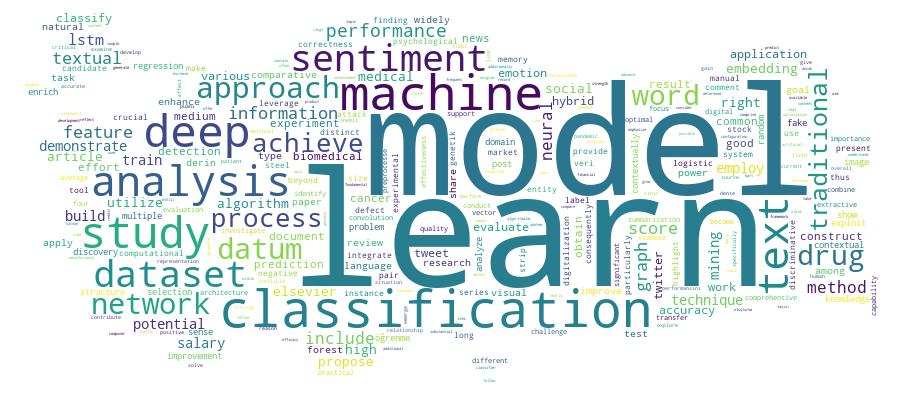
Competency Cloud
29 results
Scholarly Output Search Results
Now showing 1 - 10 of 29
Conference Object Citation - Scopus: 4A Transfer Learning Application on the Reliability of Psychological Drugs' Comments(Institute of Electrical and Electronics Engineers Inc., 2023-07-25) Sen, Tarik Uveys; Bakal, GokhanAs digitalization and the Internet stay emerging concepts by gaining popularity, the accuracy of personal reviews/opinions will be a critical issue. This circumstance also particularly applies to patients taking psychological drugs, where accurate information is crucial for other patients and medical professionals. In this study, we analyze drug reviews from drugs.com to determine the effectiveness of reviews for psychological drugs. Our dataset includes over 200,000 drug reviews, which we labeled as positive, negative, or neutral according to their rating scores. We apply machine learning (ML) models, including Logistic Regression, Recurrent Neural Network (RNN), and Long Short-Term Memory (LSTM) algorithms, to predict the sentiment class of each review. Our results demonstrate an F1-Weighted score of 85.3% for the LSTM model. However, by applying the transfer learning technique, we further improved the F1 score (nearly 3% increase) obtained by the LSTM model. Our findings proved that there is no contextual difference between the comments made by the patients suffering from psychological or other diseases. © 2023 Elsevier B.V., All rights reserved.Master Thesis Biyomedikal Bilgi Tabanları Üzerinde Hesaplamalı İlaç Yeniden Konumlandırması İçin Bilgi Grafiği Temsil Yaklaşımları(2026) Erkantarcı, Betül; Bakal, Mehmet Gökhan; Köse, AbdulkadirDrug repositioning, or the strategy of finding new medical applications to an existing drug, is a safer and cheaper alternative to development of a new drug. The thesis constructs a unified biomedical knowledge graph by integrating biomedical information resources such as SemMedDB, repoDB, and UMLS, and presents a comprehensive evaluation of seven knowledge graph embedding models: TransE, TransH, TransR, TransD, TransF, ProjE, and RESCAL. To have a biological relevance, a semantic validation pipeline was created by refining the PubMed-based biomedical language model to an accuracy of around 96% in order to determine the plausibility of the suggested drug-disease associations. TransF had the best quantitative performance with a macro area under the precision-recall curve of 0.767, whereas ProjE produced the largest number of semantically plausible hypotheses with 14 literature-supported drug-disease pairs. Moreover, an automated update system, which leverages internet of things, is used to retrieve fresh PubMed evidence on a daily basis to update semantic plausibility scores. Altogether, the knowledge graph embeddings and semantic validation workflow showed numerous new and literature-based drug-disease relations and indicated its potential to become a strong, explainable and data-driven model in computational drug repositioning. Keywords: Computational Drug Repositioning, Knowledge Graph Embedding, Biomedical Knowledge Graph, Semantic Validation, Internet of ThingsArticle Enhancing Deep Learning Performance Through a Genetic Algorithm-Enhanced Approach: Focusing on LSTM(2024-12-03) Bakal, Mehmet; Şen, Tarık ÜveysDerin öğrenme, görüntü sınıflandırma, doğal dil işleme ve konuşma tanıma gibi çeşitli uygulamalarda dikkat çekici başarılar elde etmiştir. Ancak, derin sinir ağlarını eğitmek, karmaşık mimarileri ve gereken parametre sayısı nedeniyle zorlu bir süreçtir. Genetik algoritmalar, derin öğrenme için alternatif bir optimizasyon teknik olarak önerilmiştir ve optimal bir ağ parametre setini minimize eden bir amaç fonksiyonu bulmak için etkili bir alternatif yöntem sunar. Bu makalede, derin öğrenme ile genetik algoritmaları entegre eden, özellikle LSTM modellerini kullanarak performansı artırmayı amaçlayan yeni bir yaklaşım öneriyoruz. Yöntemimiz, genetik algoritmalar aracılığıyla öğrenme hızı, grup boyutu, katman başına nöron sayısı ve katman derinliği gibi kritik hiper-parametreleri optimize eder. Ayrıca, genetik algoritma parametrelerinin optimizasyon sürecini nasıl etkilediğine dair kapsamlı bir analiz yaparak, LSTM model performansını iyileştirmedeki önemli etkilerini gösteriyoruz. Genel olarak, sunulan yöntem, derin sinir ağlarının performansını artırmak için güçlü bir mekanizma sunmakta olup bu nedenle yapay zekâ disiplininde gelecekteki uygulamalar için önemli bir potansiyele sahip olduğuna inanıyoruz.Conference Object Multi-Method Text Summarization: Evaluating Extractive and BART-Based Approaches on CNN/Daily Mail(Institute of Electrical and Electronics Engineers Inc., 2025-06-27) Inal, Yasin; Bakal, Gokhan; Esit, MuhammedWith the exponential growth of digital content, efficient text summarization has become increasingly crucial for managing information overload. This paper presents a comprehensive approach to text summarization using both extractive and abstractive methods, implemented on the CNN/Daily Mail dataset. We leverage pre-trained BART (Bidirectional and AutoRegressive Transformers) models and fine-tuning techniques to generate high-quality summaries. Our approach demonstrates significant improvements, with our best model trained on 287 k samples achieving ROUGE-1 F1 scores of 0.4174, ROUGE-2 F1 scores of 0.1932, and ROUGE-L F1 scores of 0.2910. We provide detailed comparisons between extractive methods and various BART model configurations, analyzing the impact of training dataset size and model architecture on summarization quality. Additionally, we share our implementation through an opensource NLP toolkit to facilitate further research and practical applications in the field. © 2025 Elsevier B.V., All rights reserved.Conference Object Citation - Scopus: 1Improving Salary Offer Processes With Classification Based Machine Learning Models(Institute of Electrical and Electronics Engineers Inc., 2024-09-21) Kaya, Rukiye; Saatci, Mehtap; Bakal, Gokhan; Bakal, Mehmet GokhanIn job applications, salary is major motivational factor for employees and making accurate salary prediction is crucial for both employers and employees. Utilizing advanced technologies can significantly enhance the accuracy and efficiency of salary prediction process. In this study, we explore Machine Learning (ML) methods to enhance salary prediction process. We evaluated seven classification models for predicting salary categories, with the Artificial Neural Network (ANN) model achieving the highest accuracy at 58.2% on the test dataset, followed by the K-Nearest Neighbors (KNN) model with an accuracy of 56.8%. Additionally, we employed ensemble models to further enhance prediction accuracy. Among these, the Majority Voting Classifier using Hard Voting achieved the highest accuracy at 59.3%, demonstrating the potential of ensemble techniques in refining salary predictions. The developed salary prediction tool estimates the most appropriate salary category for each candidate and help mitigate potential biases in manual salary assessments, hence enables a more objective and consistent compensation system. ∗CRITICAL: Do Not Use Symbols, Special Characters, or Math in Paper Title or Abstract, and do not cite other papers in the abstract. © 2024 Elsevier B.V., All rights reserved.Article Document Classification With Contextually Enriched Word Embeddings(2024-03-01) Akbaş, Ayhan; Mahmood, Raad; Bakal, MehmetThe text classification task has a wide range of application domains for distinct purposes, such as the classification of articles, social media posts, and sentiments. As a natural language processing application, machine learning and deep learning techniques are intensively utilized in solving such challenges. One common approach is employing the discriminative word features comprising Bag-of-Words and n-grams to conduct text classification experiments. The other powerful approach is exploiting neural network-based (specifically deep learning models) through either sentence, word, or character levels. In this study, we proposed a novel approach to classify documents with contextually enriched word embeddings powered by the neighbor words accessible through the trigram word series. In the experiments, a well-known web of science dataset is exploited to demonstrate the novelty of the models. Consequently, we built various models constructed with and without the proposed approach to monitor the models' performances. The experimental models showed that the proposed neighborhood-based word embedding enrichment has decent potential to use in further studies.Conference Object Citation - Scopus: 1Drug Repositioning via Entity Transformation in Biomedical Knowledge Systems(Springer Science and Business Media Deutschland GmbH, 2025) Erkantarci, B.; Bakal, G.The drug discovery process for known diseases is crucial in bioinformatics, given the extensive clinical trials, regulatory approvals, and high costs. Computational in silico methods are essential to mitigate these challenges, as they help identify promising drug candidates, thereby reducing the time and cost associated with drug discovery. An effective strategy in this domain is drug repositioning, where existing drugs, already approved for one disease, are repurposed for treating another. This approach is advantageous as it leverages the established safety profiles of existing drugs, avoiding toxic effects on human metabolism. In this effort, we employed a translational entity embedding-based neural network model to advance drug repositioning efforts. We utilize the Semantic Medline Database (SemMedDB) as the primary source of biomedical entity relationships for model training. The model is validated using repoDB, a gold standard dataset for drug repositioning. Technically, the model will learn to minimize the vector distance between related entities. This distance will serve as the basis for predicting potential drug-disease pairs in drug repositioning, offering a novel computational method to expedite the drug discovery process. © 2025 Elsevier B.V., All rights reserved.Article Citation - WoS: 18Citation - Scopus: 13An Empirical Study of Sentiment Analysis Utilizing Machine Learning and Deep Learning Algorithms(Springernature, 2023-12-09) Erkantarci, Betul; Bakal, GokhanAmong text-mining studies, one of the most studied topics is the text classification task applied in various domains, including medicine, social media, and academia. As a sub-problem in text classification, sentiment analysis has been widely investigated to classify often opinion-based textual elements. Specifically, user reviews and experiential feedback for products or services have been employed as fundamental data sources for sentiment analysis efforts. As a result of rapidly emerging technological advancements, social media platforms such as Twitter, Facebook, and Reddit, have become central opinion-sharing mediums since the early 2000s. In this sense, we build various machine-learning models to solve the sentiment analysis problem on the Reddit comments dataset in this work. The experimental models we constructed achieve F1 scores within intervals of 73-76%. Consequently, we present comparative performance scores obtained by traditional machine learning and deep learning models and discuss the results.Conference Object Citation - Scopus: 7A Comparative Analysis on Medical Article Classification Using Text Mining & Machine Learning Algorithms(Institute of Electrical and Electronics Engineers Inc., 2021-09-15) Kolukisa, Burak; Dedeturk, Bilge Kagan; Dedeturk, Beyhan Adanur; Gulsen, Abdulkadir; Bakal, Gokhan; Guisen, AbdulkadirThe document classification task is one of the widely studied research fields on multiple domains. The core motivation of the classification task is that the manual classification efforts are impractical due to the exponentially growing document volumes. Thus, we densely need to exploit automated computational approaches, such as machine learning models along with data & text mining techniques. In this study, we concentrated on the classification of medical articles specifically on common cancer types, due to the significance of the field and the decent number of available documents of interest. We deliberately targeted MEDLINE articles about common cancer types because most cancer types share a similar literature composition. Therefore, this situation makes the classification effort relatively more complicated. To this end, we built multiple machine learning models, including both traditional and deep learning architectures. We achieved the best performance (R¿82% F score) by the LSTM model. Overall, our results demonstrate a strong effect of exploiting both text mining and machine learning methods to distinguish medical articles on common cancer types. © 2022 Elsevier B.V., All rights reserved.Conference Object A Data-Driven Framework for Predicting Flight Arrival Delays Using Integrated Aviation and Meteorological Data(Institute of Electrical and Electronics Engineers Inc., 2025-09-17) Akyuz, Muhammed Sefa; Bakal, Gokhan
- «
- 1 (current)
- 2
- 3
- »